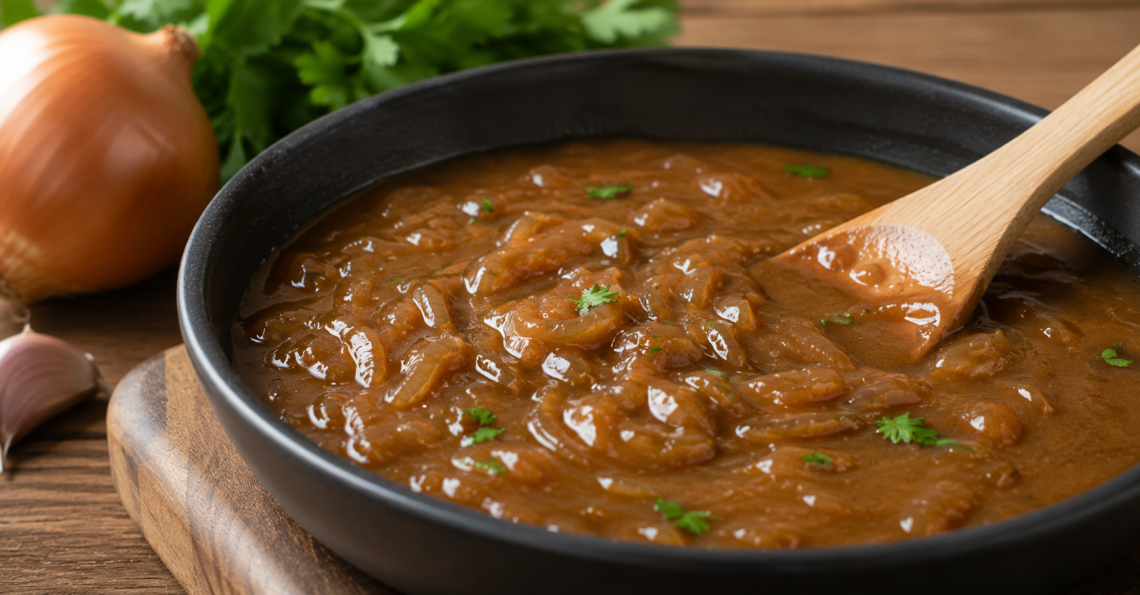
Onion gravy is a simple, flavourful sauce that complements many dishes. It uses basic ingredients and transforms them into a rich, tasty gravy. This article explains how to make onion gravy clearly and simply. You will learn each step and see tips to improve your sauce.
What You Need for Onion Gravy
To make onion gravy, gather these ingredients:
- 2 large onions, thinly sliced
- 2 tablespoons butter or oil
- 2 tablespoons plain flour
- 500 ml beef or vegetable stock
- Salt and pepper to taste
You can adjust the stock type depending on your preference or dish. Beef stock gives a stronger flavour, but vegetable stock works well for a lighter taste.
Step 1: Cook the Onions
First, heat the butter or oil in a pan over medium heat. Add the sliced onions. Cook the onions slowly, stirring often. The goal is to soften and caramelize them. This process takes about 15-20 minutes. The onions should turn golden brown and sweet. Avoid burning them, as this can create a bitter taste.
Cooking onions slowly brings out their natural sugars. This step builds the base flavour of the gravy.
Step 2: Add the Flour
When the onions are soft and browned, stir in the flour. The flour helps thicken the gravy. Cook the flour with the onions for 1-2 minutes. Keep stirring so the flour blends well and cooks without burning. Cooking the flour also removes the raw taste.
Step 3: Pour in the Stock
Next, add the stock slowly while stirring the mixture. This prevents lumps in the gravy. Stir the gravy well until it thickens. Let it simmer for 5-10 minutes. The cooking time allows flavours to combine and the gravy to thicken more.
If the gravy is too thick, you can add more stock or water until you reach the desired consistency. If it is too thin, continue to cook and stir until it thickens.
Step 4: Season and Serve
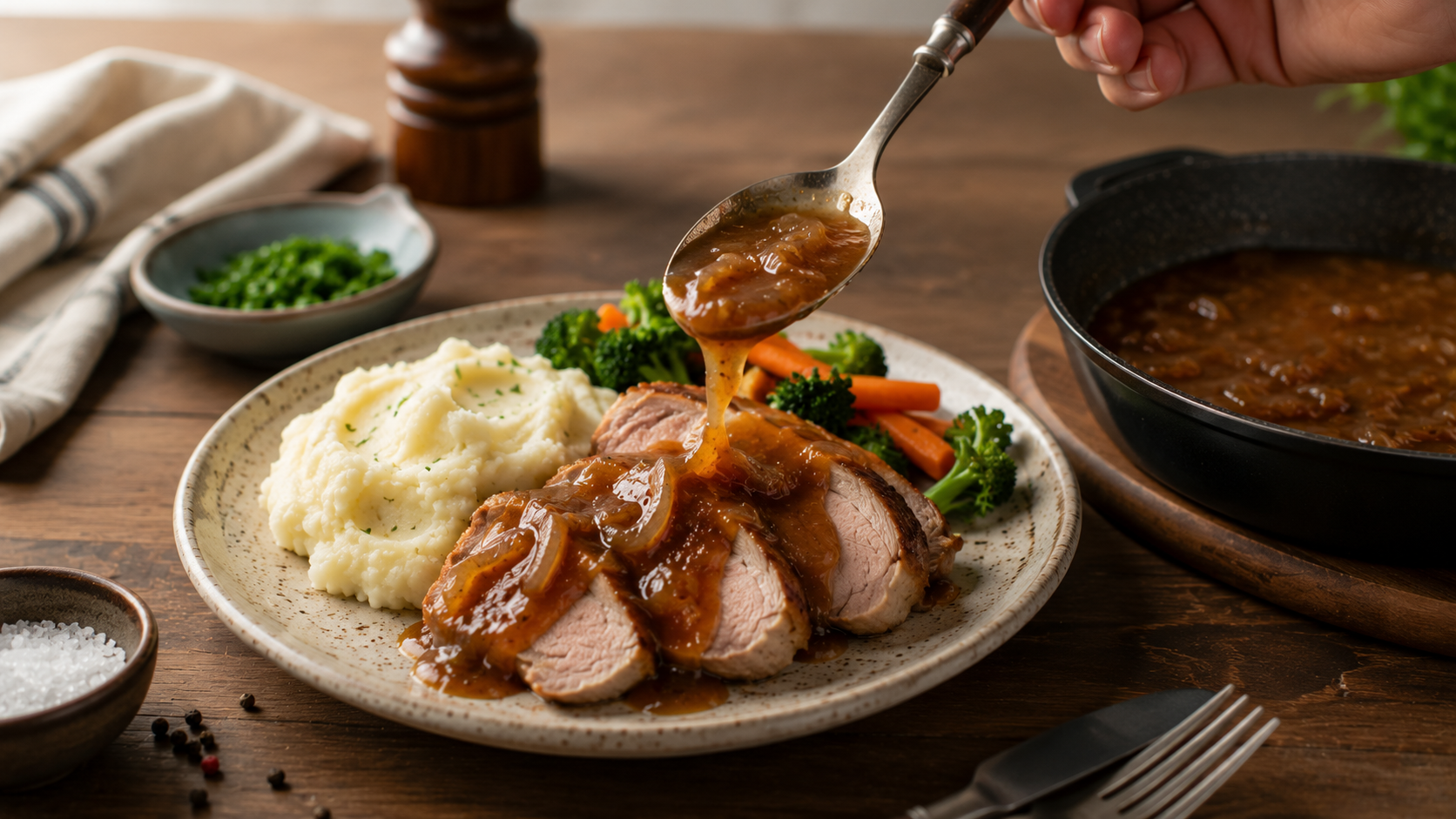
Taste the gravy and add salt and pepper as needed. You can add other herbs or spices, such as thyme or garlic, if you want extra flavour.
Onion gravy goes well with mashed potatoes, roasted meats, and vegetables.
Tips for Better Onion Gravy
- Use fresh onions. Yellow or white onions work best. Red onions can change the colour and flavour.
- Cook onions low and slow. Rushing this step can result in raw or burnt onions.
- Stir constantly after adding flour to avoid lumps.
- Use homemade or good-quality stock for richer taste.
- Adjust the thickness by varying the stock quantity or cooking time.
Pros and Cons of Onion Gravy
Pros:
– Easy to make with simple ingredients.
– Adds deep flavour to many dishes.
– Can be customized with herbs or spices.
– Works for vegan or vegetarian diets if using vegetable stock and oil.
Cons:
– Takes time to properly caramelize onions.
– Can burn easily if not watched.
– Requires stirring to prevent lumps during cooking.
Related Recipes and Resources
You can explore more onion gravy variations and recipes at:
- BBC Good Food – Offers different onion gravy recipes with videos and tips.
- Serious Eats – Explains the science behind making gravy and improving flavor.
- The Spruce Eats – Provides a classic onion gravy recipe with step-by-step photos.
For a detailed guide on how to make onion gravy with images and cooking advice, visit this page on Greener Daily Life at how to make onion gravy.
Conclusion
Making onion gravy involves cooking onions slowly, adding flour to thicken, and stirring in stock. The process is simple but requires some attention to detail. The result is a delicious sauce that enhances many meals. With practice, you can adapt the recipe to your taste by changing the stock or adding seasoning. Onion gravy remains a favourite because it combines simplicity with rich flavour.
Try the recipe today and enjoy a warm, comforting dish.