
Studying for an exam can sometimes feel like filling a bucket with water, only to watch half of it disappear the next morning. You read a chapter, underline important sentences, make notes, and spend hours revising, yet when you sit down to answer a question, the information seems to have vanished. The good news is that remembering what you study is not simply about spending more hours with a textbook. It is about using methods that help your brain store and retrieve information more effectively.
Understanding how to remember what you study can make revision less stressful and much more productive. Instead of repeatedly reading the same pages, students can use active recall, spaced revision, practical examples, and better study habits to strengthen their memory.
How to Remember What You Study More Effectively
The first step is to understand that memory improves when you actively work with information. Passive reading may feel productive because your eyes move across the page, but recognition is not the same as remembering. When you close the book and try to explain an idea from memory, your brain has to work much harder.
This is why how to remember what you study depends on active learning rather than simply increasing the number of hours spent studying.
Start With Understanding
Before trying to memorise a definition, formula, date, or theory, make sure you understand what it means. Information becomes easier to remember when it connects to something you already know.
For example, if you are learning about photosynthesis, do not only memorise the definition. Think about how plants use sunlight, water, and carbon dioxide to produce energy. Once the idea makes sense, the wording becomes much easier to recall.
Use Active Recall During Revision
Active recall is one of the simplest ways to make revision more effective. Instead of looking repeatedly at your notes, close them and ask yourself questions about what you have just learned.
After studying a topic, put your book aside and explain the main points without looking. If you cannot remember something, check your notes and try again. This process gradually strengthens your ability to retrieve information.
Students who understand how to remember what you study often discover that testing themselves is more useful than repeatedly highlighting paragraphs.
Turn Notes Into Questions
Transform headings and important concepts into questions. A heading such as “Causes of Climate Change” can become “What are the main causes of climate change?” Answer the question without checking your notes. This creates a small practice test that can be repeated later.
Try Spaced Repetition
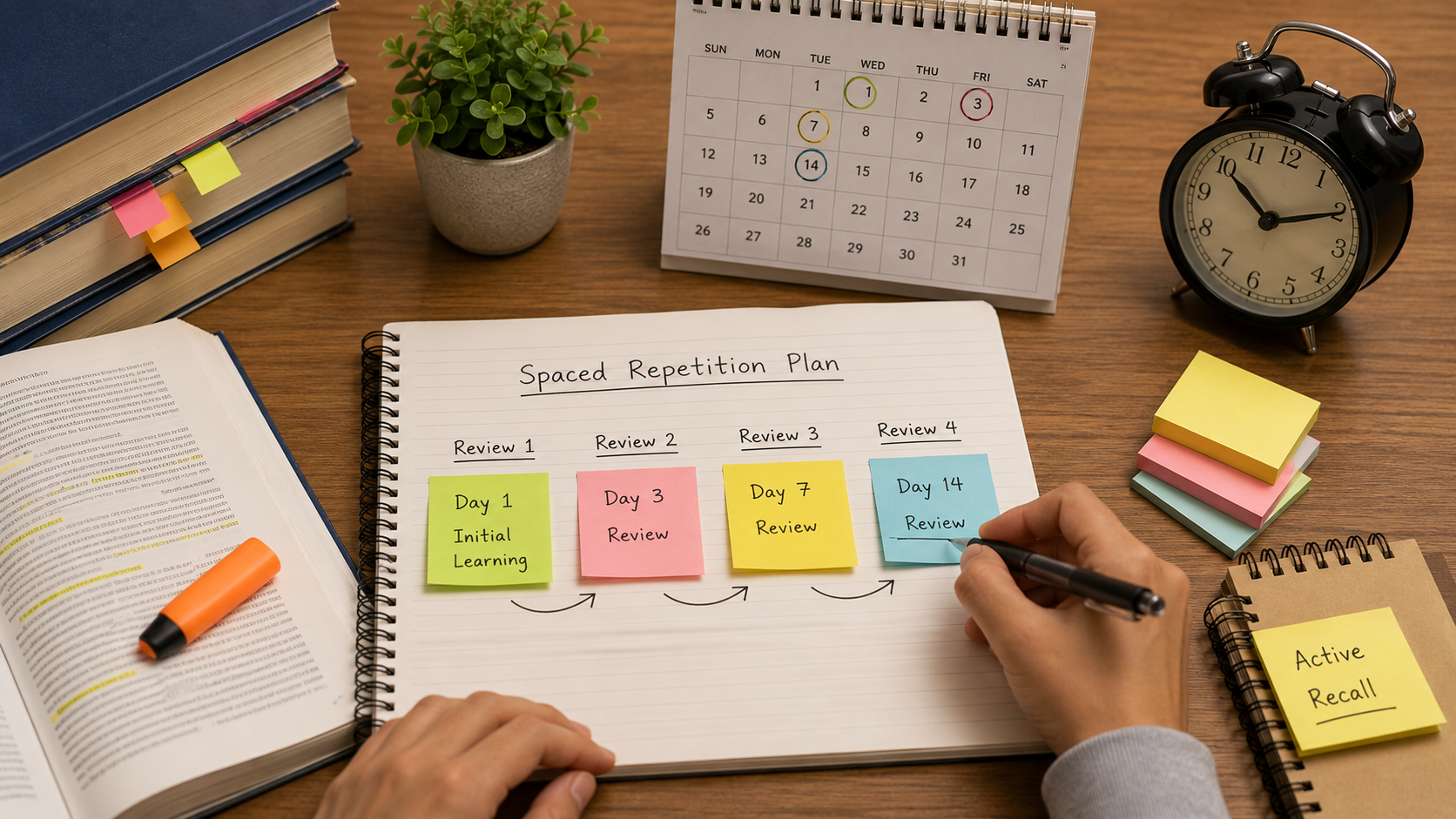
Cramming everything into one night may help you remember information temporarily, but much of it can disappear quickly afterwards. Spaced repetition works differently by spreading revision across several sessions.
You might review a topic shortly after learning it, then return to it a few days later, followed by another review the next week. Each successful retrieval strengthens the memory.
Knowing how to remember what you study becomes much easier when revision is distributed instead of being left until the last minute.
Give Difficult Topics More Attention
Not every subject needs the same amount of revision time. If you already remember a topic well, move on to something more difficult. Spend extra time on concepts that repeatedly cause mistakes. This makes your study sessions more efficient.
Explain the Topic in Your Own Words
One of the best tests of understanding is explaining something without using the textbook’s wording. Imagine you are teaching the subject to a younger student who has never studied it before.
If you can explain the idea clearly using simple language, you probably understand it. If your explanation becomes confusing, that is a sign that you need to review the topic.
The process of learning how to remember what you study becomes much more practical when you turn yourself into both the learner and the teacher.
Use the Teaching Method
Choose a topic and explain it aloud as though you are teaching a class. Avoid reading directly from your notes. This technique can reveal gaps in your knowledge that ordinary reading might hide.
Make Meaningful Connections
Your brain remembers connected information more easily than isolated facts. Whenever possible, connect new information to something familiar.
History becomes easier when events are connected into a timeline. Science becomes more understandable when theories are linked to real-life examples. Vocabulary can be remembered by connecting new words with situations in which they might be used.
This approach is less about memorisation and more about creating useful mental connections.
Use Real-Life Examples
Try to connect academic concepts with everyday experiences. A mathematical percentage can be connected to shopping discounts, while basic physics can be connected to cycling or driving. The more meaningful the connection, the easier the information may be to recall.
Write Short and Useful Notes
Good notes should help you remember rather than simply reproduce an entire textbook. Long paragraphs can make revision tiring and difficult.
After studying a section, write a short summary using your own words. Include the central idea, important details, and anything you are likely to forget.
When students learn how to remember what you study, they often realise that shorter, clearer notes are more useful than pages filled with copied information.
Avoid Copying Everything
Writing every sentence from a textbook can take a great deal of time without guaranteeing better understanding. Instead, identify the information that genuinely matters and rewrite it briefly.
Use Memory Techniques Carefully
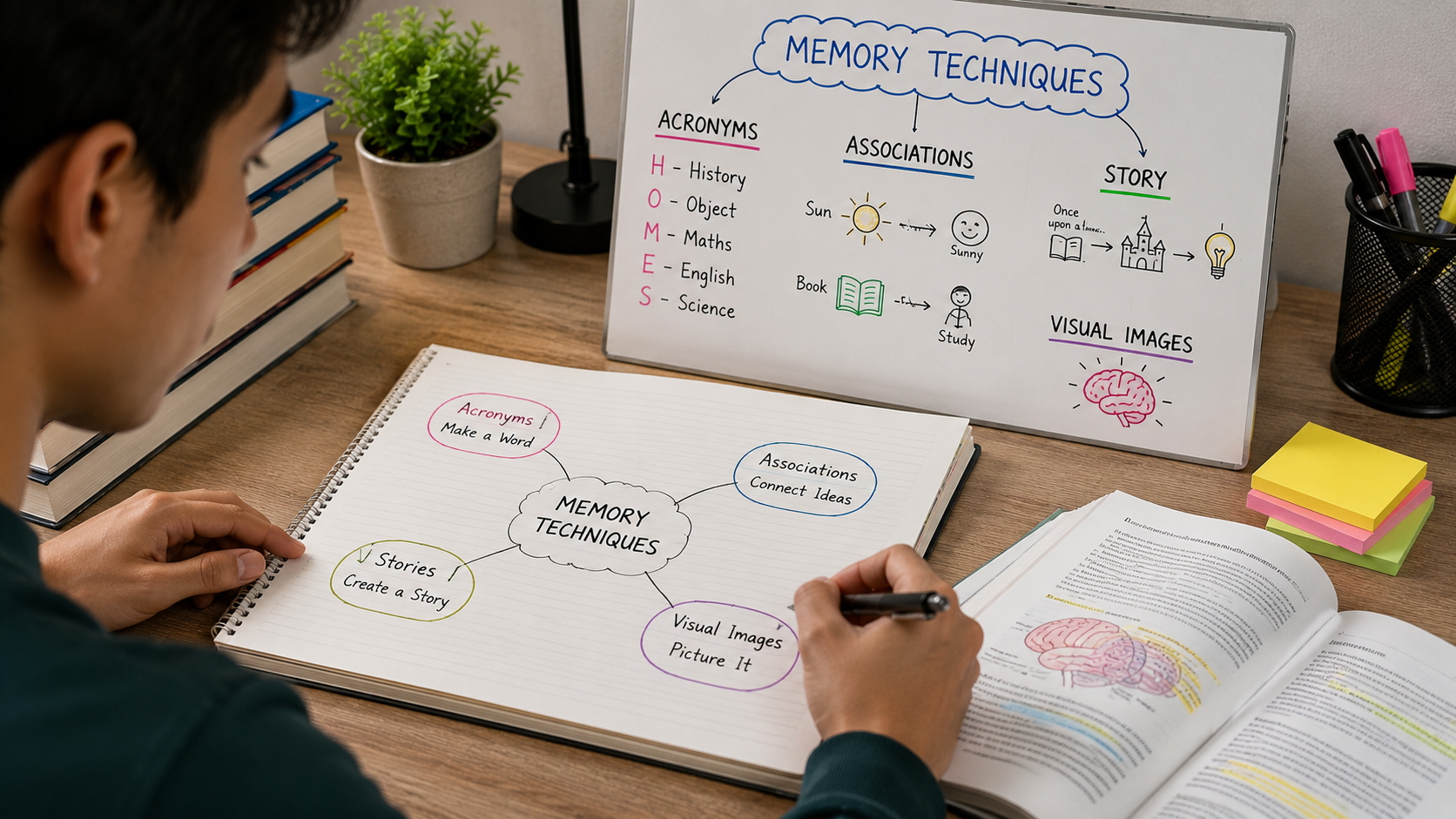
Memory techniques can be useful when you need to remember lists, sequences, or specific information. Acronyms, associations, stories, and visual images can make difficult material more memorable.
For example, if you need to remember several items in a particular order, create a memorable phrase using the first letters.
However, memory tricks should support understanding rather than replace it.
Create Mental Pictures
Visualising information can make abstract ideas easier to remember. Imagine a process happening in your mind, draw a simple diagram, or picture how different parts connect.
This is particularly useful for subjects involving processes, structures, or sequences.
Study in Focused Sessions
Long study sessions can become less productive when concentration begins to fall. Shorter, focused sessions can help you maintain attention.
Choose a specific topic, remove distractions, and study with a clear purpose. After a reasonable period of concentration, take a short break before returning to your work.
Learning how to remember what you study also means understanding when your brain needs rest.
Keep Your Phone Away
A quick notification can easily turn into several minutes of scrolling. If your phone is not needed for studying, place it somewhere outside immediate reach. Reducing distractions allows your attention to remain on the material.
Get Enough Sleep
Sleep is often treated as something that can be sacrificed during exam season, but it plays an important role in learning and memory. After studying, your brain continues processing information while you sleep.
Staying awake all night may give you additional study hours, but tiredness can make concentration and recall much harder the next day.
Students exploring should treat proper rest as part of their revision strategy rather than an obstacle to it.
Create a Regular Sleep Routine
Try to maintain a consistent sleeping pattern, particularly during the weeks leading up to important exams. A rested mind is better prepared to concentrate, understand information, and retrieve what has been learned.
Practise With Past Questions
Past papers can show you whether you can actually use the information you have studied. Reading notes may create a feeling of familiarity, but exam questions require you to retrieve and apply knowledge.
Attempt questions without looking at the answers first. Afterwards, check your responses and identify areas that need improvement.
This is an important part of how to remember what you study because successful recall becomes stronger when you practise using information in realistic situations.
Review Your Mistakes
Do not simply mark an incorrect answer and move on. Find out why the mistake happened.
Perhaps you misunderstood the question, forgot a key fact, or confused two concepts. Understanding the reason helps prevent the same mistake from happening again.
Keep Your Study Environment Comfortable
Your surroundings can influence your concentration. A noisy, cluttered, or uncomfortable space may make it harder to focus.
You do not need an expensive study room. A clean desk, suitable lighting, comfortable seating, and limited distractions can be enough.
The goal is to create an environment where your attention naturally stays on the task.
Prepare Before You Begin
Have your books, notes, stationery, and water ready before starting. This reduces unnecessary interruptions. A little preparation can make a study session feel more organised.
Stay Calm Before the Exam
Stress can make information feel harder to retrieve. Sometimes students know the answer but struggle to remember it because they become overwhelmed.
Take a moment to breathe, read questions carefully, and begin with the parts you understand best. Confidence does not mean knowing everything; it means trusting the preparation you have completed.
The final part of learning how to remember what you study is giving yourself enough confidence and calm to retrieve that information when it matters.
Focus on Progress
Do not judge your ability by one difficult revision session. Memory improves gradually through repeated practice. If you forget something today, review it and try again tomorrow. Mistakes are part of the learning process.
Build a Long-Term Study Habit
Memory improves when learning becomes a regular habit rather than something reserved for exam week. Studying a little throughout the term can reduce pressure and give your brain more opportunities to revisit information.
The most effective students are not necessarily those who study constantly. They are often the ones who use their time wisely and return to important information regularly.
Understanding is therefore less about finding one magical technique and more about combining several sensible habits.
Final Thoughts
Remembering what you study does not require an extraordinary memory. It requires the right approach. Understanding concepts, testing yourself, revising at spaced intervals, explaining ideas in your own words, practising past questions, and getting enough sleep can make a noticeable difference.
When you understand how to remember what you study, revision becomes more active and purposeful. Instead of reading the same material again and again, you begin to interact with it, question it, explain it, and retrieve it.
The aim is not to study every waking hour. It is to make the hours you spend studying genuinely useful. With consistent practice and a sensible routine, you can walk into your exams feeling better prepared, more confident, and ready to show what you have learned.
Frequently Asked Questions (FAQs)
Why do I forget information after studying?
Forgetting is a normal part of learning. Information becomes easier to retain when you review it regularly and actively test your memory instead of only rereading notes.
Is rereading notes a good revision method?
Rereading can help with familiarity, but it is more effective when combined with active recall, practice questions, summaries, and self-testing.
How often should I revise before an exam?
Regular revision sessions spread over several days or weeks are generally more useful than trying to learn everything in one long session.
Does sleep affect memory?
Yes. Good-quality sleep supports concentration and helps the brain process and retain information learned during the day.
Can teaching someone else improve learning?
Yes. Explaining a topic in your own words can reveal gaps in your understanding and strengthen your ability to recall important information.
Are practice questions useful for exams?
Practice questions help you retrieve information under conditions similar to an actual exam. They can also show which topics need more revision.