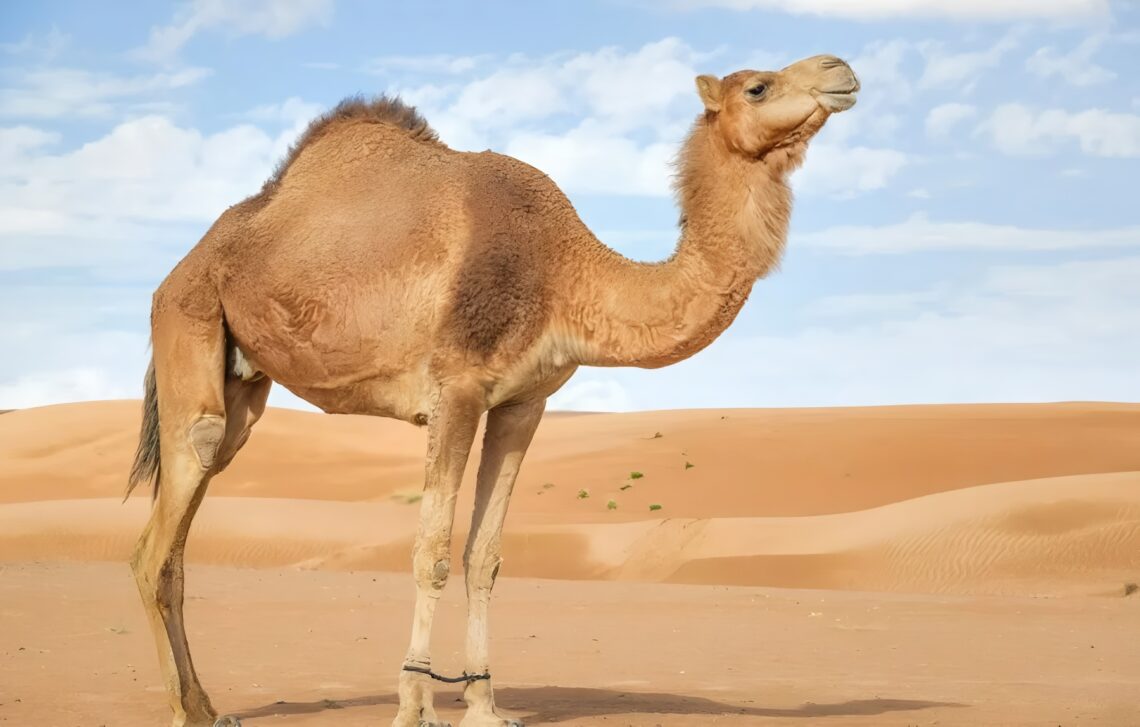
If someone asks you, Where do camels store water?, Chances are you’ll immediately think: in their humps. This is one of the most famous myths about camels. But the truth is very different and even more fascinating.
In this blog, we’ll break the myth, understand how camels manage water, and discover why they are called the ships of the desert.
Do Camels Store Water in Their Humps?
No. Camels do not store water in their humps.
Their humps are made of fat, sometimes up to 80 pounds of it. This fat is a source of energy when food is scarce. Think of it as a portable lunchbox that the camel carries on its back.
So if not water, then where do camels store water? Let’s dig deeper.
How Do Camels Store and Use Water?
Camels are masters of water conservation. Instead of having a special “tank” in their bodies, they have evolved clever ways to use and save every drop of water.
Here’s how:
-
Bloodstream Storage
- Camels have special oval-shaped red blood cells.
- These cells allow their blood to hold water more efficiently and flow smoothly even when the camel is dehydrated.
- Thanks to this, a camel can drink up to 100 liters (about 26 gallons) in one sitting without its blood becoming too thick.
- Camels have special oval-shaped red blood cells.
-
Water Recycling
- Camels lose very little water through sweat because they can tolerate a wide range of body temperatures.
- Their noses also act like natural air-conditioners: when they breathe out, moisture gets trapped and recycled back into the body.
- Camels lose very little water through sweat because they can tolerate a wide range of body temperatures.
-
Concentrated Waste
- Camel urine is thick and syrupy, and their dung is so dry it can be burned as fuel.
- This means almost no water is wasted.
- Camel urine is thick and syrupy, and their dung is so dry it can be burned as fuel.
-
Survival Mode
- A healthy camel can survive a week or more without drinking if the weather isn’t too extreme.
- In colder climates, they may go even longer.
- A healthy camel can survive a week or more without drinking if the weather isn’t too extreme.
Why Do Camels Have Humps Then?
If humps don’t store water, why are they there?
The answer lies in fat storage and temperature control.
- Fat in the hump provides energy when food is scarce.
- By keeping fat in one place (the hump) instead of spreading it all over the body, camels reduce insulation and avoid overheating in the desert sun.
So, the hump is a survival tool, just not a water tank.
Camels: Nature’s Desert Engineers
Camels are perfectly designed for desert life.
- They can lose up to 25–30% of their body weight in water without dying (most animals would collapse at just 12%).
- Their long eyelashes and sealable nostrils protect them from sandstorms.
- Wide, padded feet help them walk easily on hot sand.
All of these features, combined with their water-saving tricks, make camels one of the most impressive animals on Earth.
Quick Facts About Camels and Water
Here are some bite-sized facts that people often wonder about:
- How much water can a camel drink at once? Up to 100 liters (26 gallons).
- How long can camels go without water? Around 7 days in hot weather, sometimes longer in cooler conditions.
- Do all camels have one hump? No dromedary camels have one hump, while Bactrian camels have two.
- Do camels sweat? Yes, but very little compared to humans.
Final Thoughts
The idea that camels store water in their humps is a myth, but the truth is even more amazing.
Camels survive the harshest deserts not by carrying water tanks, but by using smart biological tricks: efficient blood cells, recycling systems, concentrated waste, and fat-filled humps that store energy.
So the next time someone asks, “Where do camels store water?”, you’ll know the real answer: not in their humps, but in their bloodstream and smart survival strategies. Camels remind us that sometimes nature’s solutions are more clever than we imagine.